Your Partner in FinTech Upskilling

Address:

Shelton Street, Covent Garden, London, UK

Contact Info:

Email: inquiry@yankagolemin.com

Working Hours:

M-F: 10:00AM – 3:00PM

© 2026 Yanka Golemin

Edit Template

Your Partner in FinTech Upskilling

Address:

Shelton Street, Covent Garden, London, UK

Contact Info:

Email: inquiry@yankagolemin.com

Working Hours:

M-F: 10:00AM – 3:00PM

© 2026 Yanka Golemin

Edit Template

Your Partner in FinTech Upskilling

Address:

Shelton Street, Covent Garden, London, UK

Contact Info:

Email: inquiry@yankagolemin.com

Working Hours:

M-F: 10:00AM – 3:00PM

© 2026 Yanka Golemin

Edit Template

Your Partner in FinTech Upskilling

Address:

Shelton Street, Covent Garden, London, UK

Contact Info:

Email: inquiry@yankagolemin.com

Working Hours:

M-F: 10:00AM – 3:00PM

© 2026 Yanka Golemin

Edit Template

How Barclays Used Open Banking APIs to Innovate Faster — And What SMBs Can Learn From It


  • Work
  • -
  • Case Studies
  • -
  • How Barclays Used Open Banking APIs to Innovate Faster — And What SMBs Can Learn From It

For years, big banks have carried the reputation of being slow, rigid, and weighed down by legacy systems. Meanwhile, fintech challengers seemed to ship new features every month, delighting customers with fast onboarding, transparent pricing, and seamless mobile experiences.

But Barclays quietly proved something important:

Speed isn’t a fintech advantage.
Speed is an architectural advantage.

And architecture can be changed.

Open Banking APIs gave Barclays the unlock they needed — not to rebuild their entire tech stack, but to modernize how innovation happened inside the bank. Instead of trying to out‑build younger competitors, they learned how to out‑partner them.

This blog post breaks down how they did it — and how SMBs can use the same playbook today.


The Problem: Great Teams, Slow Systems

Inside Barclays, the biggest challenges weren’t talent or ambition — they were friction.

  • Integrations took months.
  • Legacy systems weren’t built for modern products.
  • Compliance flowed sequentially, not in parallel.
  • Customer expectations rose faster than internal delivery cycles.
  • Fintechs were setting the UX bar higher every quarter.

Teams knew what they wanted to build.
They just didn’t have the structural ability to ship fast enough.

This wasn’t a “bank problem.” It’s a problem any business faces when systems, tools, or processes slow down execution.


The Industry Shift: Why APIs Became the Answer

Open Banking regulations (PSD2, UK OBIE) required banks to provide secure access to accounts and payments through APIs. Most banks treated this as a compliance headache.

Barclays treated it as a strategic unlock.

APIs offered:

  • A faster way to innovate
  • A safer way to expose data
  • A modular way to scale
  • A partner‑friendly ecosystem
  • A path out of legacy constraints

Instead of building every feature internally, Barclays realized they could connect to specialist fintech capabilities and deliver better outcomes faster.

It was a shift from:

“We must build everything ourselves” → “We must orchestrate the best capabilities.”


What Barclays Actually Did

Free or higher

Membership Required.

More content is available after subscription.

FREE Membership Available.

You must be a Free OR Paid member to access this content.

1. Built a high‑quality API foundation

Clean documentation, secure authentication, reliable uptime, clear scopes, developer sandboxes.

2. Exposed high‑value APIs first

  • Account data
  • Verification
  • Payment initiation
  • FX‑related data flows

These unlocked immediate value.

3. Partnered with fintech specialists

For example, using experts for cross‑border transfers, identity flows, and mobile-first experiences.

4. Redesigned consent journeys for trust

Clear, simple, reversible, safe.

5. Implemented integrations in weeks, not months

APIs reduced heavy internal work and made innovation more plug‑and‑play.

6. Launched high‑impact use cases

  • Faster cross‑border transfers
  • Modern onboarding
  • Better verification flows
  • Mobile improvements

7. Used data to iterate and scale

Monitoring dashboards turned API innovation into a continuous improvement loop.

The result?

Barclays began moving like a fintech — without losing the trust of a bank.


The Results: Faster, Safer, Simpler Banking

1. Faster product delivery

Long roadmaps shrank.
Teams could ship again.

2. Better customer experiences

  • Instant verification
  • Faster transfers
  • Smoother onboarding
  • Transparent fees

3. Lower operational friction

  • Fewer manual workflows
  • More automation
  • Small teams could do more

4. Stronger risk management

Bank‑verified data and compliant APIs meant safer flows, not riskier ones.

5. Lower long‑term cost

Building less → maintaining less → shipping faster.

6. A stronger competitive position

Barclays gained relevance in a fintech‑centric market — without trying to become a fintech.


What SMBs Can Learn From Barclays

Even if you’re not a bank, the lessons apply directly.

1. Don’t build everything internally.

Leverage best‑in‑class tools via APIs.

2. Fix the friction, not the symptoms.

Most “growth problems” are really “friction problems.”

3. Architecture determines speed.

Systems that can’t talk to each other slow everything down.

4. Partnerships create leverage.

You don’t need to be the best at everything — just connect to what is.

5. Start small and scale.

Barclays began with a few high‑impact use cases. So can you.

6. Compliance and trust are assets.

Design trust into every flow.

7. Optionality beats ownership.

The more modular your stack, the faster you can move.


How to Apply This Today (Simple Playbook)

Here’s a practical way any SMB can copy Barclays’ strategy:

Step 1 — Identify your slowest, highest-friction workflow.
Step 2 — Find a specialist tool that solves it via API.
Step 3 — Integrate a single workflow (don’t overhaul everything).
Step 4 — Measure the before/after impact.
Step 5 — Improve one more workflow.
Step 6 — Repeat until your operations feel “light.”

Small wins compound.


Final Thought

Barclays didn’t transform by “trying to be innovative.”
They transformed by changing the structure that made innovation slow in the first place.

APIs gave them:

  • speed
  • leverage
  • optionality
  • better customer experiences
  • operational simplicity

It wasn’t a digital transformation program.
It was an architectural upgrade that empowered everyone — operators, customers, and partners.

And the best part?

Any SMB can use the same playbook today.

Previous Post
Is Your SMB Ready for Real-Time Payments? The 2026 Shift That Changes Everything
Next Post
FinTech Trends 2026

Trending Posts

  • All Posts
  • AI & Finance
  • Case Studies
  • Compliance
  • Financially Wired
  • FinTech Strategy
  • Lessons
  • Payments
  • Signals
  • Skills

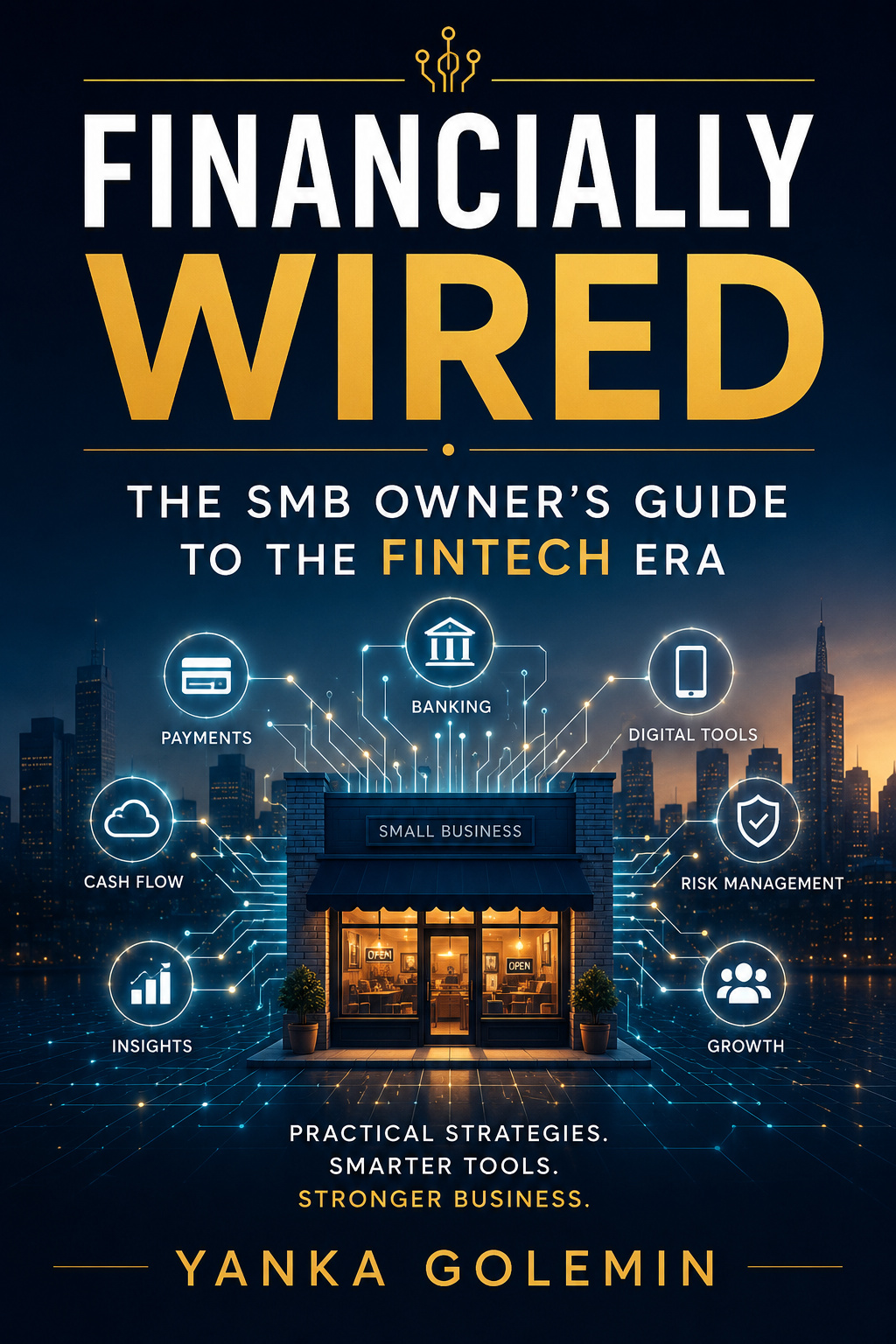
Financially Wired: The SMB Owner's Guide to the FinTech Era by Yanka Golemin

Blog Category

Blog Tag

Private counsel for SMB founders, finance leads, and operations leaders.

Financially Wired (Order Now on Amazon)

Contact Info

inquiry@yankagolemin.com

© 2026 Yanka Golemin

FinTech upskilling for SMB founders, finance leads, and operations leaders.

Quick Links

Collections

Financially Wired (Order Now on Amazon)

© 2026 Yanka Golemin

FinTech upskilling for SMB founders, finance leads, and operations leaders.

Quick Links

Collections

Financially Wired (Order Now on Amazon)

© 2026 Yanka Golemin