End of Content.
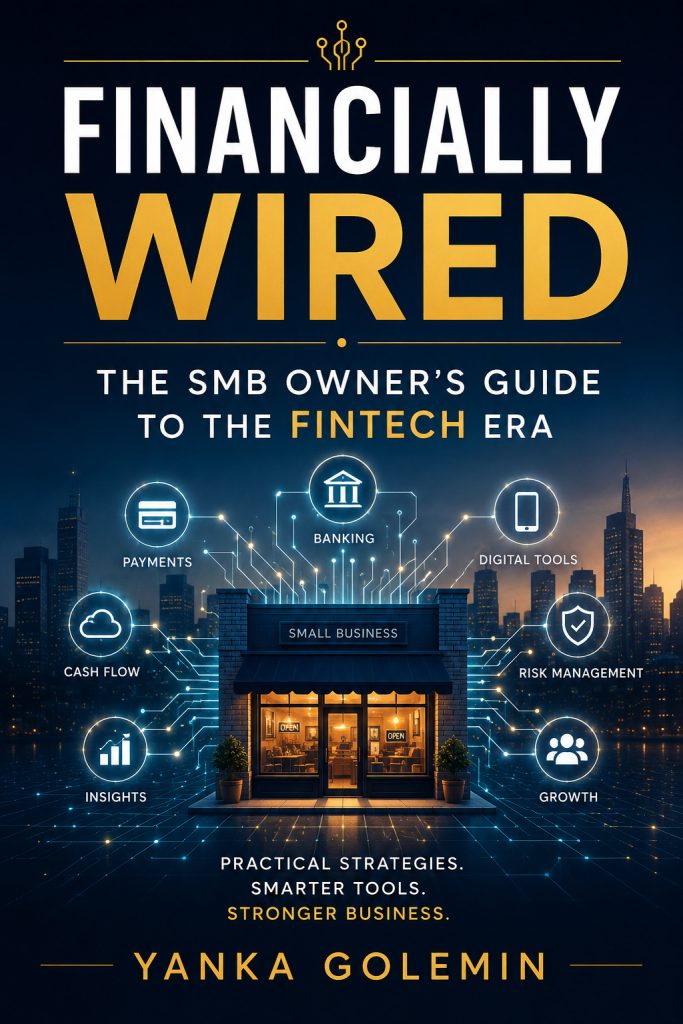
Yanka Golemin builds financial fluency programmes for businesses that have been told, one way or another, that finance is somebody else’s job. She’s the founder and chief executive of Vogue Boost, a UK company working with small and mid-sized organisations on the comprehension gap this book describes.
She came to the subject from inside it, over thirty years. Much of that was financial crime and forensic investigation at institutional scale — work that teaches you, faster than anything else does, how much an organisation can fail to notice about itself. She has also taken technology companies through regulatory scrutiny and founded businesses across fintech, professional services and the public sector. The account of institutional power in her new book Financially Wired is written from within one.
She holds advanced education in informatics and strategy, and co-authored a university textbook on knowledge management — a book written for people already inside the subject. This one, ‘Financially Wired’, isn’t. It’s her first for a general readership, and the argument in it has been assembled over years of sitting with business owners while they read their own numbers properly for the first time.
@YankaGolemin
Time to incorporate AI, FinTech and Talent Upskilling
No Upskilling = Growth Killer:
~213% of exec annual salary loss if parting with key talent.
94% of employees would stay at a company longer if it invested in their learning and development.
AI and upskilling are non-negotiable for SMBs aiming to thrive.
44% of workers’ core skills are expected to change in the next five years.
THE PAIN
_____________
You are the only person who understands how the business actually runs. Every process depends on your knowledge, approvals, and constant availability. When you step away, progress slows or stops entirely, making true delegation—and real freedom—nearly impossible.
_____________
Your systems were added one at a time, creating a messy collection of tools that don’t communicate. You pay for multiple platforms, yet your team still relies on spreadsheets and manual workarounds. The result is inefficiency, errors, and constant operational friction across the business.
_____________
Your early team handles everything—operations, customer support, marketing, admin—often in the same afternoon. This creates confusion, duplicated work, and constant context switching. Instead of scaling, the business slows down because no one has the bandwidth to own processes properly.
_____________
Every team has its own version of the truth. Marketing celebrates growth while finance warns about tight cash flow. Because data is scattered and outdated, you wait days or weeks for accurate reporting—forcing decisions to be made on instinct instead of real‑time insight.
_____________
You carry the weight of every major decision, large or small. Instead of guiding strategy, you’re dragged into approvals, firefighting, and operational choices. The team looks to you for answers you shouldn’t have to provide, blocking their autonomy and the company’s growth.
Private counsel for SMB founders, finance leads, and operations leaders.
© 2026 Yanka Golemin